


Analysis of brightness variations to certify the quality of each product
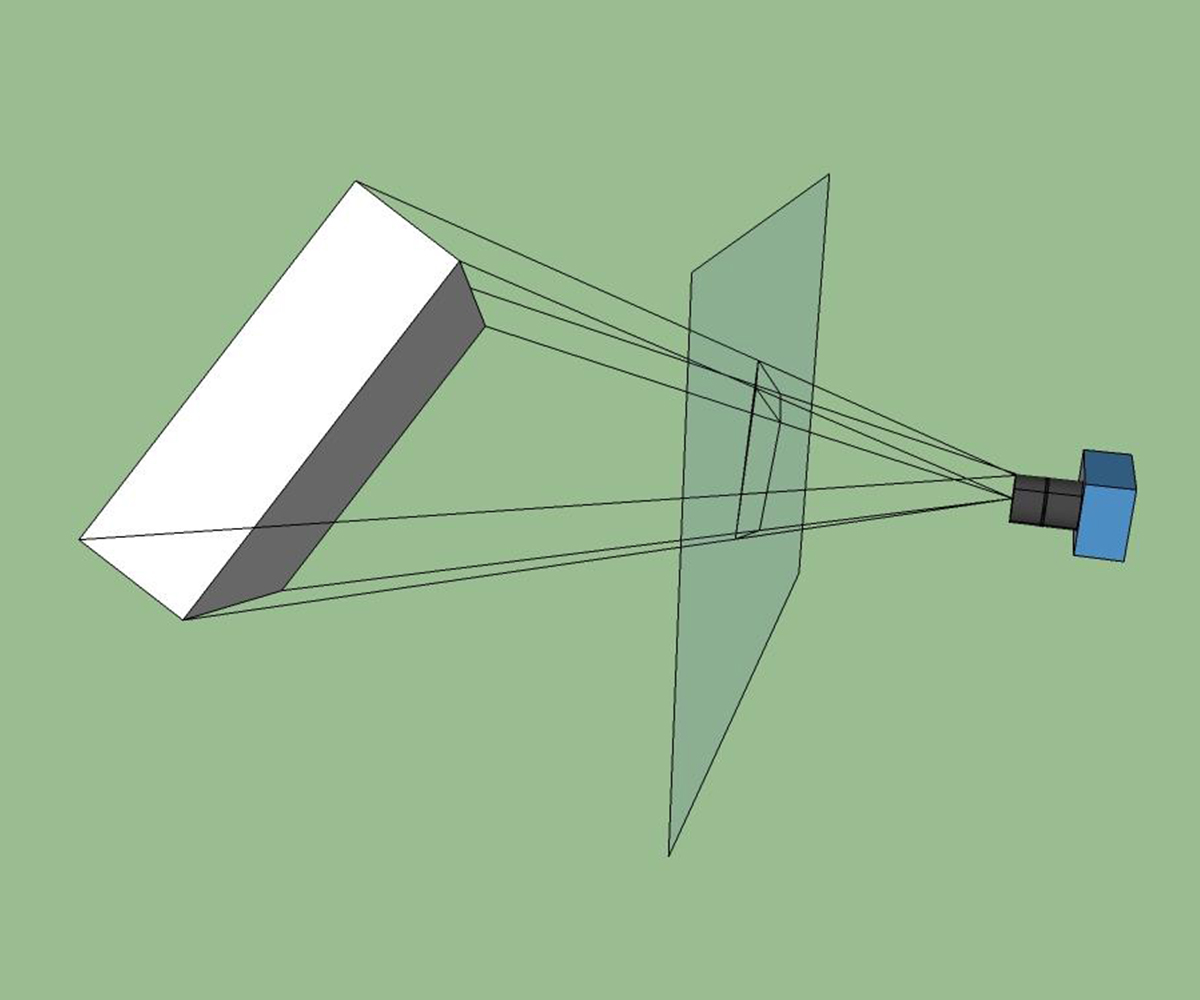
The camera converts a three dimensions real-world scene (3D) in a two dimensions plane (2D) in which the third dimension is “flattened”.
In the field of machine vision, 2D systems are the most used and they are appropriate when the information on the third dimension is irrelevant for the purpose of control required.
For example, in the case of the guides robot, it is necessary that the workpiece lies on a plane whose distance from the camera is known or measured with a device other than the vision system. These vision system are 2D ½ if they operated on different floors but known a priori.